
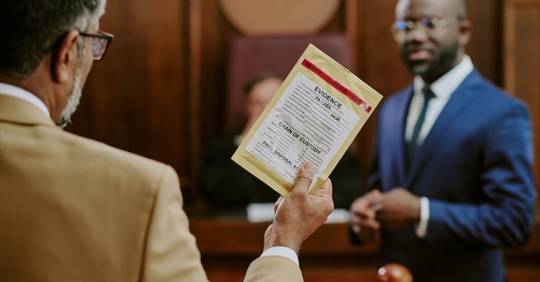
When facing criminal charges, the evidence presented by the prosecution can significantly impact the outcome of a case. However, not all evidence is automatically allowed in court. In California, certain evidence may be challenged and excluded if it was obtained in violation of a person’s constitutional rights. This process is known as “suppression of evidence.”
If you believe your rights were violated during an investigation or arrest, take action now by contacting Law Offices of Randy Collins. Early review of your case can help protect your defense. Call (844) 285-9559 for guidance.
What Does “Suppressing Evidence” Mean?
Suppressing evidence means asking the court to exclude certain information from being used in a criminal trial. If a judge grants a motion to suppress, that evidence cannot be presented to a jury.
This typically happens when evidence was collected in a way that violates constitutional protections, particularly the Fourth Amendment, which guards against unlawful searches and seizures.
Common Reasons Evidence May Be Suppressed
Evidence can be challenged and potentially excluded for several reasons. Some of the most common include:
- Unlawful search and seizure: Evidence obtained without a valid warrant or legal exception may be suppressed
- Lack of probable cause: Police must have a reasonable basis to make an arrest or conduct a search
- Improper traffic stops or detentions: If the stop itself was unlawful, the resulting evidence may be excluded
- Failure to read Miranda rights: Statements made during custodial interrogation without proper warnings may be suppressed
- Coerced or involuntary statements: Confessions made under pressure, threats, or improper tactics may not be admissible
Each of these issues depends heavily on the facts of the case and how law enforcement conducted the investigation.
How Illegal Searches Affect Evidence
Law enforcement generally needs a warrant to search a person, vehicle, or property. A warrant must be supported by probable cause and approved by a judge.
However, there are exceptions where searches may be allowed without a warrant, such as:
- Consent given voluntarily
- Evidence in plain view
- Searches conducted during a lawful arrest
- Certain emergencies
If a search does not meet legal standards, any evidence obtained may be challenged in court.
The Role of Miranda Rights
Miranda rights protect individuals during custodial interrogation. If someone is in police custody and being questioned, officers must inform them of their rights, including the right to remain silent and the right to an attorney.
If these warnings are not properly given, statements made during questioning may be suppressed. However, this typically applies to custodial interrogation—not every interaction with law enforcement.
What Happens During a Motion to Suppress
A motion to suppress is a formal request filed by the defense asking the court to exclude specific evidence. The process may involve:
- Reviewing police reports and evidence
- Presenting arguments about how the evidence was obtained
- Calling witnesses, including law enforcement officers
- A judge determines whether the evidence should be excluded
If the motion is successful, the prosecution may lose critical evidence, significantly weakening their case.
Why Suppression Matters
Suppressing evidence can have a major impact on a criminal case. In some situations, excluding key evidence may:
- Reduce the charges
- Led to the dismissal of the case
- Strengthen the defense’s negotiating position
- Limit what the jury is allowed to hear
Because of this, identifying potential suppression issues early is often an important part of building a defense strategy.
Situations Where Suppression Issues Commonly Arise
Suppression issues often come up in cases involving:
- Traffic stops and vehicle searches
- Drug possession or distribution charges
- Arrests based on surveillance or informants
- Home or property searches
- Statements made during police questioning
Each situation must be carefully reviewed to determine whether proper procedures were followed.
Legal Guidance in Newport Beach
If you are facing charges in Newport Beach, California, or nearby areas, understanding whether evidence in your case can be challenged is an important step. A criminal defense lawyer in Newport Beach, CA can review how evidence was obtained and determine whether a motion to suppress may apply.
Law Offices of Randy Collins guides individuals navigating criminal charges and evaluating potential defense strategies. To discuss your case and explore your options, contact Law Offices of Randy Collins today or call (844) 285-9559.